A commercial storefront door drags primarily due to worn pivot hinges, a failing overhead hydraulic door closer, loose frame fasteners, or structural frame sag. Addressing a dragging door promptly prevents damage to your flooring, strains on hardware, ADA non-compliance penalties, and security risks caused by doors failing to latch properly.
1. The 4 Main Reasons Commercial Storefront Doors Drag
Aluminum storefront glass doors endure hundreds—sometimes thousands—of cycles daily. Over time, heavy foot traffic and environmental wear cause mechanical components to fail or shift.
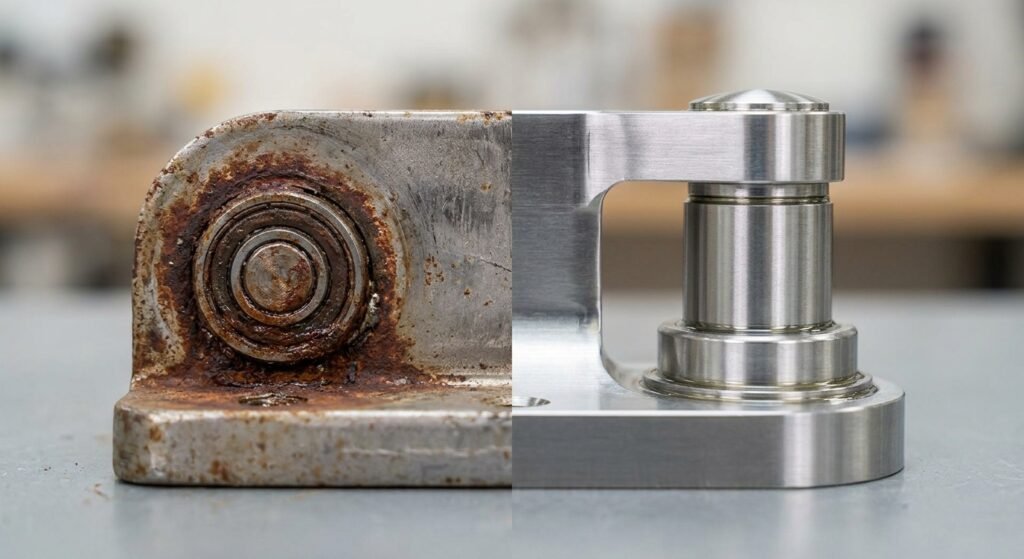
- Worn or Broken Door Pivots & Hinges: Most commercial aluminum doors pivot on heavy-duty top and bottom offset pivots or continuous (geared) hinges. When internal bearings degrade or grease dries out, the entire door drops a fraction of an inch—causing the bottom latch-edge to scrape against the threshold or ground.
- Failing Overhead Hydraulic Door Closers: The concealed or surface-mounted closer arm controls the door’s weight and sweep speed. If internal seals leak hydraulic fluid or the mounting bracket loosens, the door loses tension and sags under its own weight.
- Frame Distortion and Sagging: Thermal expansion, building settlement, or loose wall anchors can cause the header or side jambs of the aluminum frame to shift out of square. Even a quarter-inch drop in the top frame corner forces the opposite bottom corner into the floor.
- Loose Fasteners or Damaged Thresholds: High-traffic entryways suffer constant vibration. Over time, the screws holding the pivot arms to the door stile back out. Alternatively, high-profile thresholds can warp or accumulate debris underneath, reducing floor clearance.
2. Diagnostic Checklist: How to Pinpoint the Cause
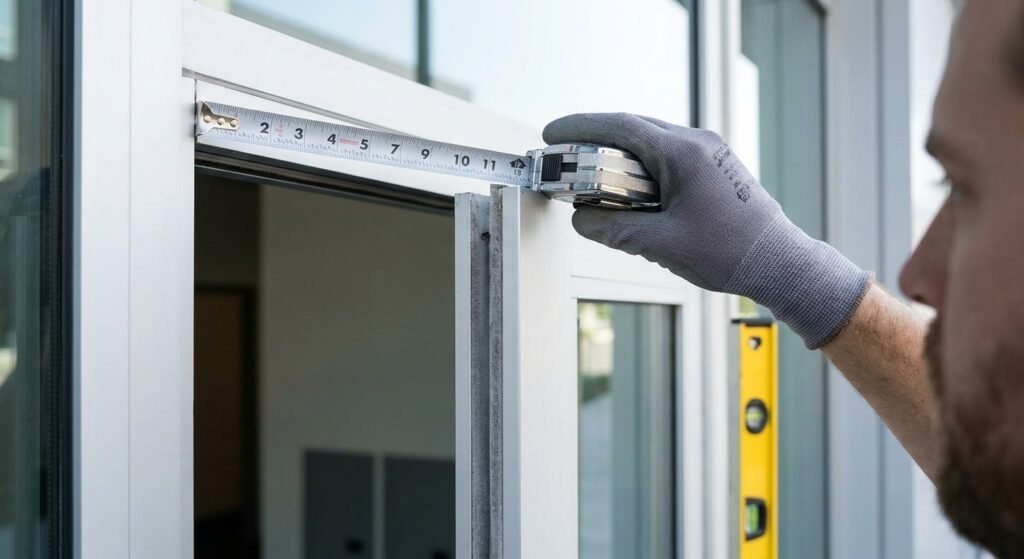
Before attempting repairs, perform this 60-second visual and mechanical check to identify where the misalignment originates:
- Check the Top and Side Gaps: Close the door and inspect the reveal (the gap between the door panel and the aluminum frame). Is the top gap uneven? If the gap is wide at the hinge side and tight at the handle side, the top pivot is loose or worn.
- Inspect for Fluid Leaks: Look at the body of the door closer mounted at the top header. Black, sticky oil residue signals blown internal seals, requiring a full closer replacement.
- Lift the Door: Put a pry bar or flat wedge carefully under the door near the lock stile and lift gently. If there is noticeable vertical play or slop, your pivots or hinges need immediate replacement.
- Inspect the Threshold: Sweep away dirt and check if the metal threshold strip has bowed upward or if concrete underneath has shifted.
3. Can You Fix It Yourself? (DIY vs. Professional Repair)
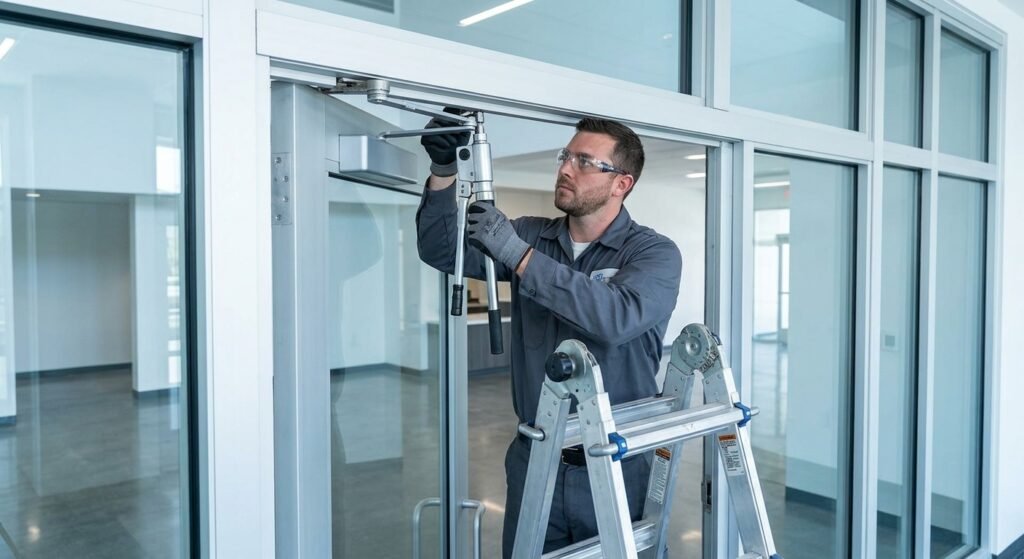
Some minor adjustments can be performed in-house, but structural frame alignment and heavy glass door repairs require specialized glazier equipment to prevent glass breakage and safety hazards.
| Issue | Recommended Action | DIY or Pro? |
| Loose frame screws / mounting plates | Tighten all visible fasteners on door stiles, hinges, and arm brackets using standard Hex or Torx keys. | DIY-Friendly |
| Door closing too fast or slamming | Adjust the latch and sweep speed valves on the closer using an Allen wrench (turn clockwise to slow down). | DIY-Friendly |
| Debris blocking threshold | Clear built-up dirt, ice, or gravel out of the threshold track and under the door sweep. | DIY-Friendly |
| Worn pivot bearings or continuous hinges | Support heavy glass door, remove panel, press out old pins, and align new heavy-duty hardware. | Call a Professional |
| Leaking hydraulic door closer | Replace concealed or surface-mounted arm unit and recalibrate sweep and backcheck tension. | Call a Professional |
| Out-of-square frame alignment | Re-anchor jambs, square glass framing, or perform full aluminum storefront structural adjustments. | Call a Professional |
4. The Risks of Ignoring a Dragging Door
Deferring storefront door maintenance leads to costly operational issues:
- Security Vulnerabilities: A dragging door often fails to fully engage the electric strike, magnetic lock, or deadbolt, leaving your commercial facility unlocked overnight.
- ADA Compliance Violations: Americans with Disabilities Act (ADA) standards require entrance doors to open easily (typically under 5 lbs of opening force). A dragging door exceeds maximum resistance limits, opening your business to liability.
- Shattered Glass Hazard: Commercial storefronts utilize tempered or laminated safety glass held under rigid tension. Forced operation on a warped door frame puts excessive torque on the glass edge, leading to sudden shattering.
- Flooring Damage: Continuous scraping damages costly terrazzo, tile, concrete, or vinyl entrance flooring.
Restore Smooth Operation to Your Commercial Storefront

A dragging door creates an uninviting impression for customers and poses a daily operational liability. Simple fastener adjustments can temporarily relieve scraping, but long-term reliability requires precise hardware alignment and heavy-duty replacement components.
If your commercial storefront entrance in New Jersey or the Tri-State area needs expert adjustment, hardware upgrades, or structural glass door repair, contact the team at AMG Glass & Metal. Our experienced glaziers diagnose frame shifts, repair continuous hinges, and restore flawless performance to your commercial entrance. Call us today at 862-702-3761 or request an on-site commercial quote online.