For commercial contractors, architects, and developers planning 2027 projects, accurate lead time forecasting is the difference between a profitable build and costly site delays. In 2027, the average lead time for standard fabricated insulated glass units (IGUs) is 5 to 15 business days, while custom commercial architectural glazing for curtain walls requires 8 to 20 weeks. Similarly, commercial metal fabrication ranges from 2 to 5 days for basic stock materials up to 4 to 10 weeks for large-scale industrial runs.
This guide breaks down the exact timelines, supply chain shifts, and material variables defining the commercial glass and metal industry today.
Typical Commercial Glass Fabrication Timelines
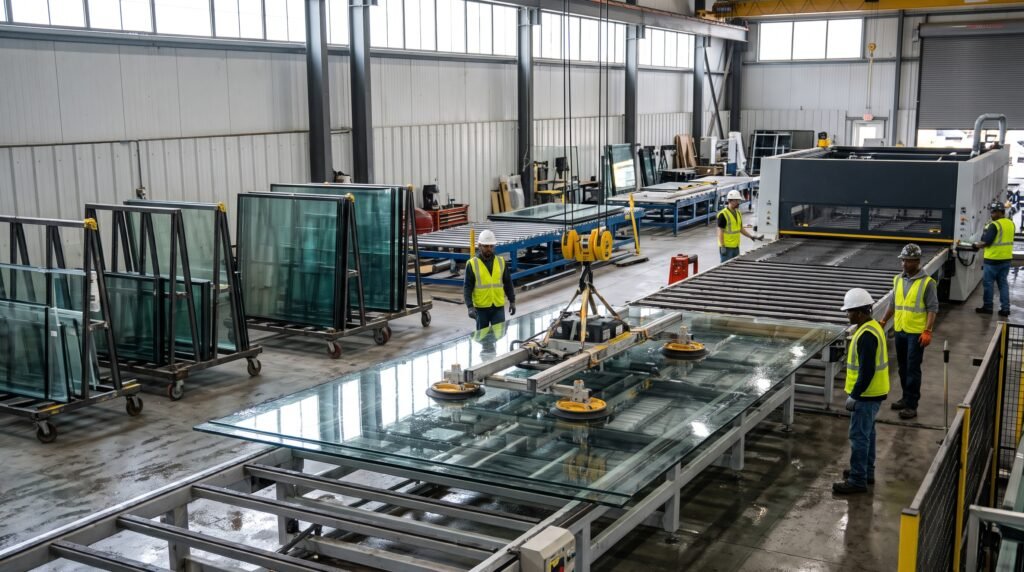
The distinction between stock and fabricated-to-order glass remains the primary factor dictating delivery schedules. While standard units move quickly, complex architectural elements require advanced planning.
- Standard Insulated Glass Units (IGUs): 5 to 15 business days from the point of order confirmation, depending on the complexity of the unit and the capacity of the supplier.
- Custom Architectural Glazing: 8 to 20 weeks for complex commercial curtain wall assemblies under normal conditions. This can stretch longer during periods of supply chain disruption.
- Installation & Closeout: Physical installation ranges from less than an hour for simple windows to multiple days for expansive commercial storefront or curtain wall systems.
Metal Fabrication and Structural Timelines
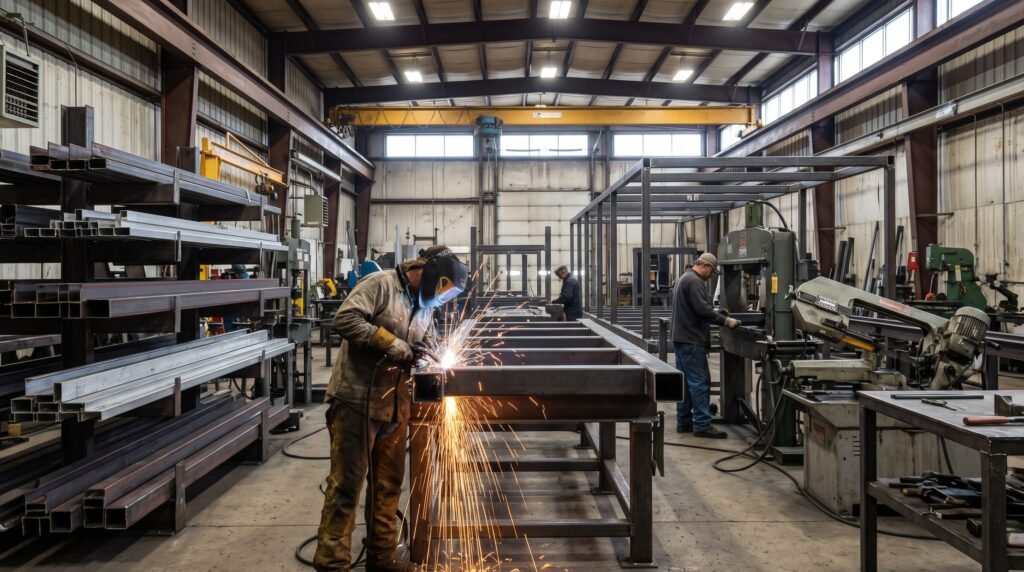
Metal lead times in 2027 are heavily segmented by the fabricator’s level of automation, shop capacity, and material sourcing strategy.
| Project Scope | Typical Lead Time | Key Variables |
| Material Procurement (Domestic) | 2–5 business days | Applies to stock mild steel and aluminum tube from service centers. |
| Specialty Alloys / Heavy Structural | 1–3 weeks | Required for 316 marine stainless, custom plates, or large structural members. |
| Structural Steel (Beams/Columns) | 3–8 weeks | Engineering and stamped drawings must be finalized before material procurement drives the timeline. |
| Industrial / Commercial Runs | 4–10 weeks | Highly dependent on quantity, material availability, and shop queue depth. |
| Complete Metal Buildings | 9–16 weeks (Total) | Roughly 3–6 weeks for engineering/drawings, followed by 6–10 weeks for fabrication and delivery. |
Key Supply Chain Factors Impacting 2027 Lead Times
To accurately forecast project milestones, project managers must account for several macro-level variables actively shaping production schedules:
1. The Automation Divide and Labor Shortages
The persistent shortage of skilled welders and fabricators has severely impacted manual shops, pushing lead times that were once 1 to 2 weeks out to 3 to 6 weeks for complex orders. Conversely, fabricators who have invested in advanced automation and digital tool integration are successfully maintaining or even compressing their delivery schedules.
2. Domestic Sourcing vs. Imported Materials
Relying on imported steel introduces significant schedule risk, including 6 to 12-week ocean freight lead times, customs clearance delays, and tariff volatility. Domestic sourcing has become a premium advantage, offering rapid 2 to 5-day lead times from in-stock inventory and complete schedule certainty.
3. Site Readiness and Permitting Gating
Fabrication can be completed rapidly, but site readiness often gates the actual installation. Commercial and structural permit turnarounds in major metropolitan jurisdictions can easily add 2 to 6 weeks to a timeline before work can legally commence or be closed out.
Strategic Advice for Project Managers

To mitigate delays in 2027, construction professionals must align fabrication completion targets with actual site readiness (such as concrete curing or framing inspections) rather than just the contract date. For prefabricated structural assemblies, procurement should be initiated during the design development phase—often 10 to 16 weeks prior to your target installation date. Partnering with fabricators who leverage domestic materials and operate automated facilities is the most reliable strategy to ensure schedule certainty and protect your bottom line.